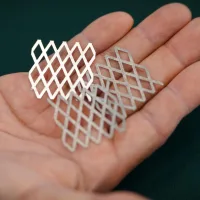
Researchers at the University of Hong Kong developed a new stainless steel called SS-H2 that resists corrosion in seawater electrolysis conditions for green hydrogen production through a dual-passivation mechanism combining chromium and manganese protective layers. The material could replace expensive titanium components in hydrogen production systems, potentially reducing structural costs by 40 times.
 Otto Beta



1 comment
Researchers at the University of Hong Kong developed a new stainless steel called SS-H2 that resists corrosion in seawater electrolysis conditions for green hydrogen production through a dual-passivation mechanism combining chromium and manganese protective layers. The material could replace expensive titanium components in hydrogen production systems, potentially reducing structural costs by 40 times.